African Burial Ground National Monument: 2013 New York Stories 2

In 1991, I was living in New York when the burial place of Africans who were enslaved and free were discovered at what is now 290 Broadway in downtown Manhattan. Their remains were buried from the late 1600′s to the 1794. It is only recently in 2013 that I am fully understanding and appreciating the African Burial Ground in the context of a long history of Africans and people of African descent . . . my history . . . our history.

This slideshow requires JavaScript.

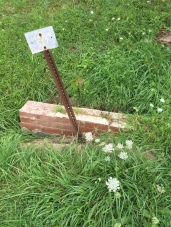
The National Parks Service offers a broad experience at the monument including an indoor video and exhibition at the museum, and an outdoor memorial.

Some of the focus is on the spiritual implications of a people in bondage holding onto their humanity by burying loved ones in the midst of oppression and violence. Only humans bury their dead. The curators offer insightful social and cultural context to the lives of people of African descent including how some labored and family lives.

Learn more reading Audrey Peterman’s “African Burial Ground National Monument: Peace at Last” in Our True Nature: Finding a Zest of Life in the National Park System.

Photos by Dianne Glave

Arrival: 2013 New York Stories 1

I really had to practice some self control when I arrived at Laguardia Airport in Queens outside New York City. Super Shuttle took an hour to arrive at the airport. Shame. And the driver was no bargain even with GPS. Shame. He almost left the back door open. I visualized my luggage, strewn across the BQE-Brooklyn Queens Expressway.

I  did look to my left and saw soccer players playing under the dark of night lit by powerful lights. What a pleasure.

We took the Kosciusko Bridge into the Lower East Side. Darkness . . . Illusion of brightness in the bright lights.

Back to the driver. He jumped over a stop and had to double back. I really wanted to get in the passenger seat and direct him. We were a few blocks from my hotel so I grabbed up my bags knowing I was a few moments from freedom. I yelled to the driver, “There’s my hotel on the left.”

I jumped out of the van and yelled at the other passengers, “Good luck, ya’all!”

They looked at me like frightened birds, appearing as though their last hope had ejected from the shuttle.

So here I am back in my homeland . . .  bright lights, big city . . .  Singing a different song having lived in so many places . . . But so quickly returning to the core of my New York self.

Isaac Marion’s Warm Bodies: Zombies, Alzheimer’s, and Morality

I’ve always read novels and watched films that are speculative in nature more for the metaphors and meaning and less for the violence and the macabre. My recurring question is often: what do the words and images say about all us as people?

So my fascination with zombies, the undead makes sense. It’s personal because of members of my family are suffering from dementia in their old age. Speculative fiction including the zombie genre, also gets me thinking about the deeper meaning of life including our spiritual lives.

The fascination with zombies goes back further for me as a teen, when I first read Mary Shelley’s novel Frankenstein in which various body parts were reincarnated as a zombie whole. I can list many Frankenstein incarnation on film going back to black and white movies.  Fast forward to “28 Weeks Later,” the film, which jump-started the zombie craze in the 21st Century. And we can’t forget AMC’s “The Walking Dead,” still currently on television because of stellar ratings.

ImageThese zombies can be interpreted in many ways but here are just two that I’ve drawn from reading Issac Marion’s zombie bestseller Warm Bodies: zombies as a metaphor for Alzheimer’s and the moral tensions between being undead and human.

There isn’t a more complex map or landscape than the human brain. And when Alzheimer’s takes hold, that map slowly painfully shrinks, reconfigures, and disconnects. The person inside once known as dear grandma or loving father becomes someone else. Like the violent zombies that beloved someone, our beloved someone, can become alien wielding a knife or screaming, really shrieking.

These people, our people, mirror those in Warm Bodies. As is true of the zombie genre, the undead mindlessly seek flesh to continue shuffling along. Our own people suffering from dementia simply shuffle along. Yet for grandma and dad, there is something going on inside, a struggle against the dying of the light. Something of their moral selves sputters and flickers.

The interesting turn with Warm Bodies is the many zombies display varying degrees of sentience as is true of the many stages of Alzheimer’s that ultimately lead to death. R, the central character, has a soul. He’s driven by eating flesh but also grapples with the meaning of God in his life, and the tension between eating and killing in relationship to the sanctity of life.

And it seems love, central to most organized religions including Christianity, truly transforms R, the undead. Will R stop eating flesh because it is the right thing to do? Will love transform him from a killer to the redeemed? Will he make the moral, the right choice?

As the world grapples with increasing numbers of people living longer and dying from dementia or it’s related medical complications, some family and friends forced to stand by and watch a slow death, cling to love. Alzheimer’s patients,our people, ultimately succumb to the disease seemingly undead, particularly in the last stages.

For some, our fascination with zombies is fueled by reality filled with dementia patients including those with Alzheimer’s.

I don’t want to give away too much concerning Warm Bodies’ plot, including the love story. I will tell you I was moved by R, a zombie listing and tilting between right and wrong, moral and immoral. The polarities are fascinating but the inherent moral struggles are enthralling.

If you pick up the book, consider the parallels to Alzheimer’s and morality as you read. The alternative to reading is watching the film Warm Bodies, a zombie romance, which will be out in a theatres near you on February 1, 2013 just in time for Valentine’s Day. I hope the nuances in the novel are ultimately matched in the film.

Downtown Pittsburgh ALIVE in the Noon Hour

Yes, sometimes you have to go downtown to PENN DOT (we called it Motor Vehicle in Queens, NY). And that “work” trip turned into an an urban adventure. Walk! Walk! Walk!

I KNEW I was in downtown Pittsburgh on a weekday in the noon hour when I was cussed out by someone. Up. Down. In. Out. That’s city life. With the good comes the bad.

So some good. People filled the streets, the concrete and asphalt teeming with people. I passed an African American man seated drumming on a corner. There’s often so much more ethnic diversity at the center, the downtown then on the edges, the suburbs.

In the parking garage, I ran into a woman from Johnstown, BEYOND Pittsburgh. She was all a-jitter about to step to the city streets. She wasn’t used to the city and talked about getting lost getting into the city, asked if the 1st floor was street level, and finally wistfully asked me as we parted was this her floor. I gave her a few words to soothe her before she fluttered off into beautiful chaos. I launched her off into the hectic city and said, “Try walking around after you’ve found your destination.” I hope my suggestion did not fall like seed on fallow ground. I hope she gave downtown Pittsburgh a try. Dance with the city. Dance with the city.

Here’s some Los Lobos, which is what makes me think of cities across America–a love song.

If you don’t live in a city, take a deep breath and give it a try. Launch off. Dive in. JUMP.

Soul Pitt Quarterly Green Issue: Spring 2012

Take a look at “African Americans . . . The Environment . . . Healing” in the Spring 2012 Soul Pitt Quarterly, an urban magazine in Western Pennsylvania. I was overjoyed to read three other black and green articles including: “A Conversation with ‘Black Into Green‘ Blogger Gloria Johnson from Cleveland.”

Monongahela River Weeds and the Ghosts of an Industrial Past

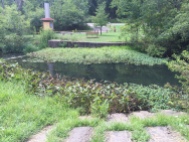
At the Waterfront in Homestead, Pennsylvania, I discovered a trail with the Monongahela River on one side and a mall on the other side.

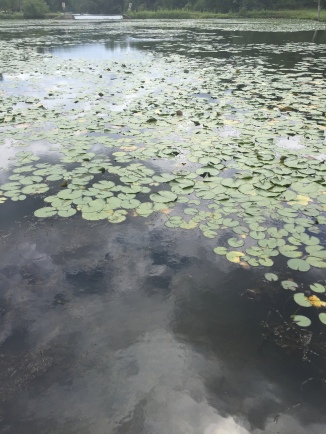
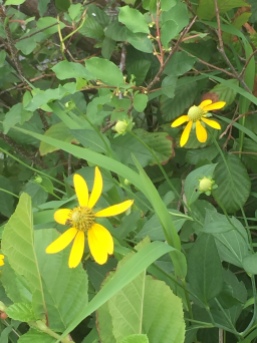
Homestead was an access point for immigrants who worked in the Homestead Steel Works during the 19th century. The immigrants moved from the river’s edge  up the hill to 8th Avenue. Fast forward into the future, and I spotted a robin on a limb on the trail re-framing the past for leisure and recreation. The rivers edge is covered by trees and weeds, some flowering.

It’s great heading out the woods for a hike but we can find places to walk in urban places like Pittsburgh.

Photos by Dianne Glave on an iPhone

Eve Project, A Farm, A Saturday Afternoon

What a lovely afternoon spent with the EVE Circle. LaVerne Baker Hotep, with the Center for Victims of Violence and Crime (CVVC), organized a retreat for a group of African American women at Wild Red’s Gardens, formerly known as Mildreds’ Daughters Farm. It is the only farm within the Pittsburgh city limit.

This slideshow requires JavaScript.

The women spent a joyous day outdoors on the farm. When the skies darkened and it got cooler, they joined together for food and fellowship.

I shared part of the afternoon with the women sharing about African Americans and the environment, and leading a guided meditation focusing on faith, the environment, and health. I was delighted to see Lois McClendon with B-PEP/Coalition Against Violence and a Pittsburgh environmentalist. 

Photos by Dianne Glave

The Hunger Games: From the Dystopian to the Great Depression

The Hunger Games has a somewhat  integrated cast that includes African Americans: Katniss Everdeen, the protagonist of the Hunger Games, sure loves black people. And we love her too. I’m often critical of the relationships between African American and whites, along with stereotypes of African Americans in film, television, and literature. But The Hunger Games got it right. Cinna, an African American man and Katniss’ stylist, becomes the father she lost in the District 12 mines. Rue, the little African American wood elf, initiates an alliance with Katniss in the games-to-the-death. They find a sister in one another. Katniss in particular, embraces Rue much like the little sister Katniss left behind in District 12. There’s no patriarchy here where whites save African Americans. And the African Americans are not stereotyped as mammy’s or thugs. True relationships are established on film and experienced by the audience.

Without the relationships, the Orwellian dystopian themes typical of science fiction would not matter. The foundation of The Hunger Games is George Orwell’s 1984 (1949). He is the great granddaddy of dystopian science fiction in the form of the novel. 1984 is where we get the term Big Brother, the roving eye of technology that is always tracking us in the 21st century. We see much the same in The Hunger Games where even the trees have electronic eyes. And the world in The Hunger Games has gone to hell in a hand-basket, a post-war hand-basket in which the survivors live in a police state. If that isn’t Orwellian, I don’t know what is.

Oh, the first scenes in The Hunger Games are moving pictures that mirror the gritty still photos of rural people taken during the Great Depression. The pain, the seams in the faces of even the young remind me of Dorothea Lang’s “Migrant Mother.” In the film, the camera stops at a worn laced high-top shoe. It lingers on the wind in the trees. The people in District 12, Katniss’ little town, are a worn people, worn by mining. Those scenes, mirroring a Hunger Games Appalachia, are the most memorable in the film.

Katniss leaves home to fight as tribute in The Hunger Games. The trope of youth battling in games is not new going back to ancient Greece. There’s also a modern take which I believe is a nod to “The Most Dangerous Game,”  a short story by Richard Connell. In the story, one man hunts another. Ultimately, the hunted creates intricate traps to capture the hunter. Both the human-hunt and traps are echoed in the Hunger Games. Katniss did something similar turning the game on the elite, her captors and humiliating them.

Taken together, what does the Hunger Games say about contemporary American society?  The Great Recession of the 21st Century first comes to mind. Much like the children living in poverty in the 12 Districts and battling in the games, we are frightened at every turn by unemployment, high gas prices, and a depressed real estate market. The film reflects our national malaise. In addition, our children are consumed by technology and even in a virtual forest, the children in the games are moved around like puppets on strings among the trees and along the creek. As Americans, have we lost our rugged individualism, unquestioning puppets in the day-to-day drudgery of survival?

Hopefully, Catching Fire and Mockingjay, the next novels in the trilogy will translate well, meeting the high expectations already met by The Hunger Games, the first in the trilogy.

2012 State of Diversity and the Environment Blog Carnival

Another Blog Carnival Presented by Rooted in the Earth! Read the original call for blogs.

I am going to keep this simple: my hope is to join with each of you  to meaningfully and fruitfully gather together face-to-face focusing on people of color and the environment in the near future. In 2009, Audrey Peterman did just that with Breaking the Color Barrier in the Great American Outdoors.

Some thoughts on some wonderful work in 2011 and where we are headed in the future including 2012:

~ Andrea Roberts’ Extending our Useful Lives Being Honest About Sustainability and Mortality

~ Rue Mapp’s The Year of Relevancy

~ Dianne Glave’s She Wolf  Transitioning to the New Year of 2012

Go to the blogs to read thoughts, ideas . . . some are transforming thoughts into action.

Do contact me at dianneglave@gmail.com if you would like to add your blog to this carnival.